-
30 Sep 2026
-
For Office Managers & Team Leads
-
6 min Read
The Rise of the “DIY” Corporate Event: Flexible Team Building for Fast-Moving Teams
Not every team get-together needs months of planning, a venue booking and a big budget. Sometimes you’ve just closed a tough project, a new starter has joined, or the team simply needs to reset — and you want to do something this Friday.
That’s why more companies are mixing formal, fully facilitated events with quick, self-hosted team challenges in between. Done well, a “do-it-yourself” session keeps the energy going all year without the cost or admin of a full event day.
This guide covers how self-contained challenge kits work, how to run a quick indoor or outdoor challenge yourself, and how to find the right balance between structure and letting the team have fun.
The best team culture isn’t built at one big event a year. It’s built in the small moments in between.
SA Teambuilding
How self-contained challenge kits work
The idea behind a team-building kit or activity box is simple: everything you need for a challenge comes in one place — the materials, the rules, a timer and a scoring sheet. There’s nothing to design and very little to set up. Someone opens the box, reads out the brief, and the teams get going.
-
Build challenges: teams get the same basic materials — paper, tape, straws, string — and have to build the tallest tower or a bridge that holds a weight.
-
Puzzle and code-breaking boxes: a series of locked clues that lead to a final answer, like a mini escape room on a boardroom table.
-
Quiz and trivia packs: ready-made rounds, including questions about your own company.
-
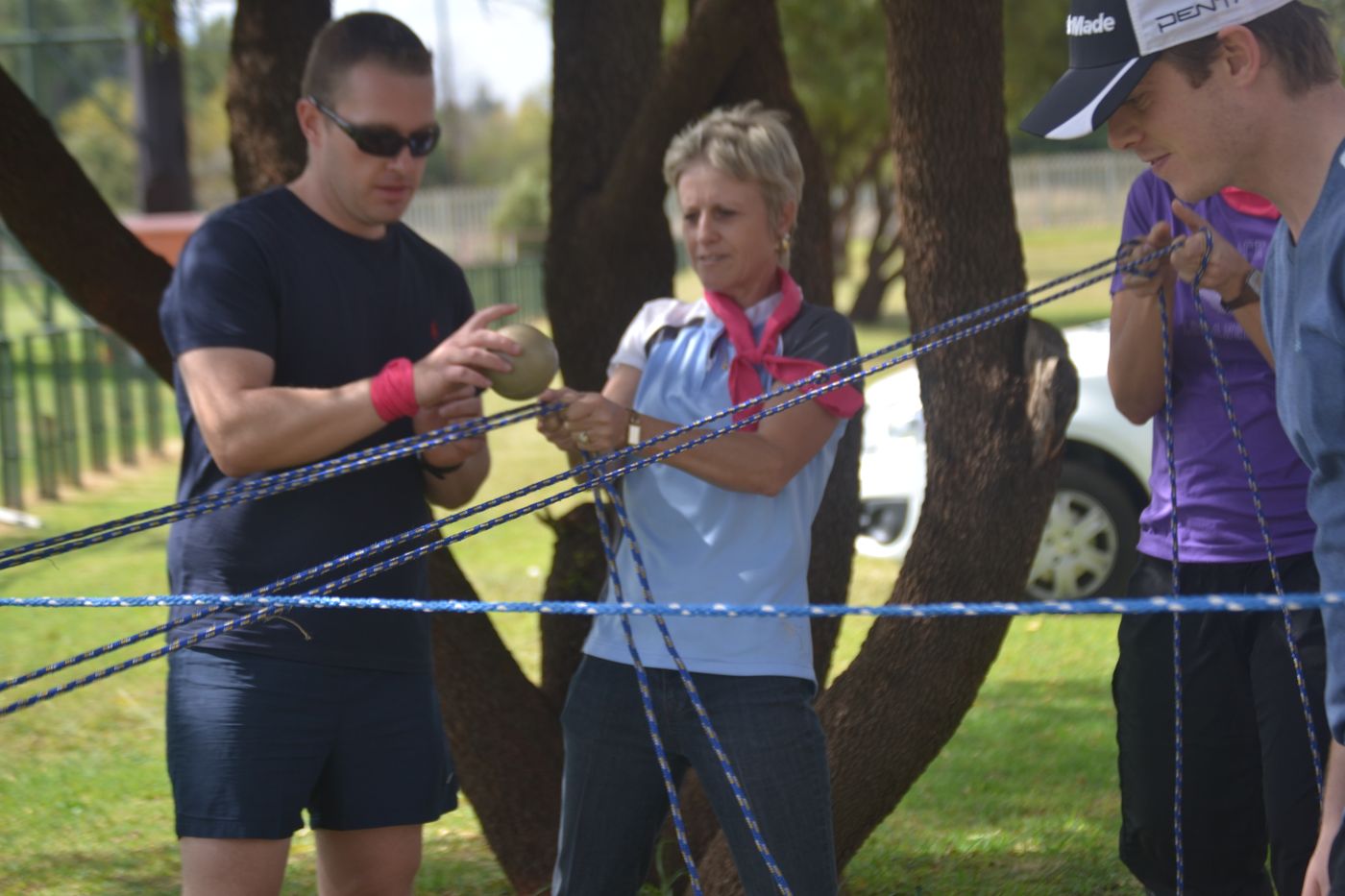
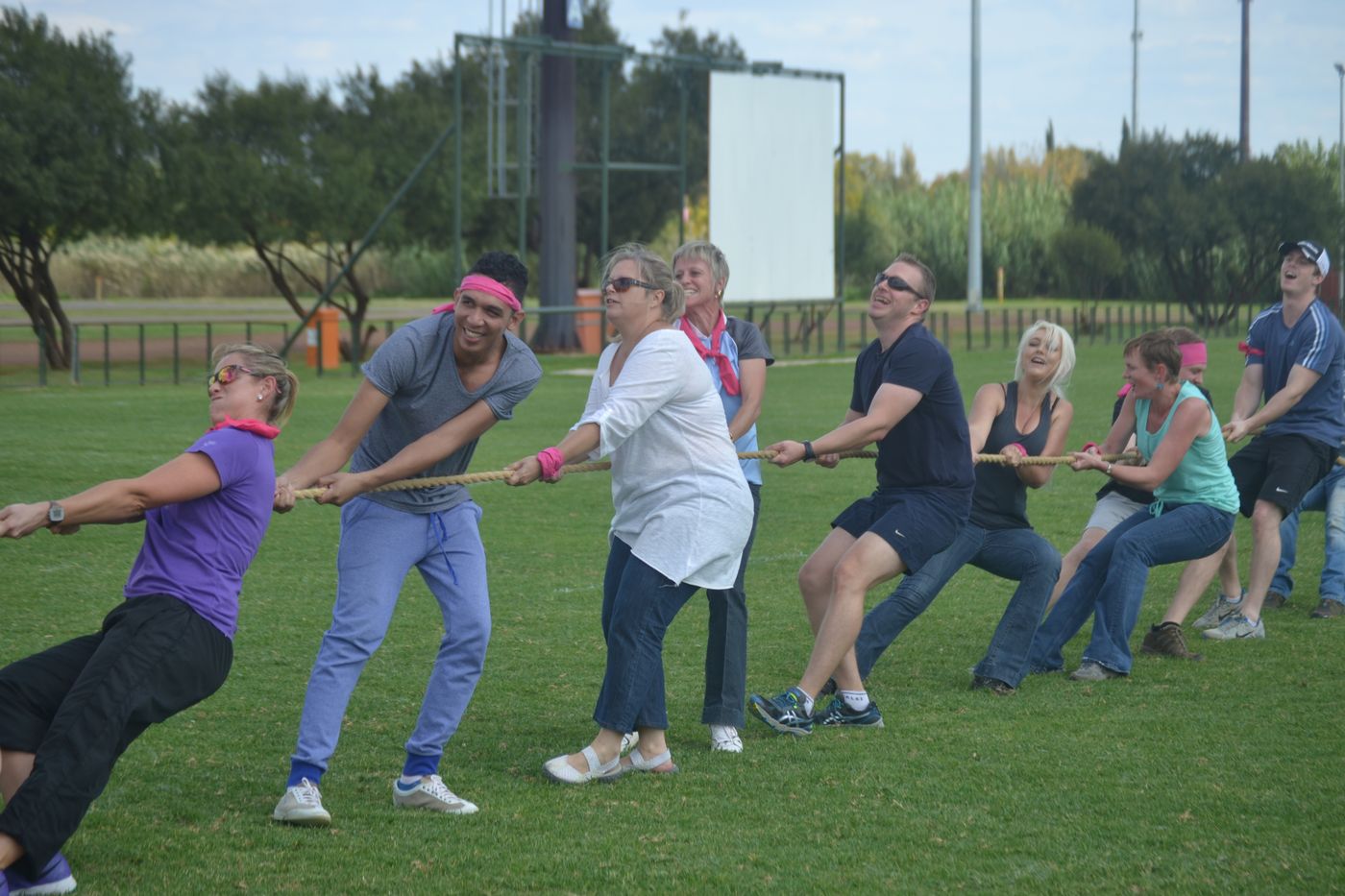
Outdoor mini-games: relay batons, blindfolds and markers for quick games on the lawn or in the car park.
You can buy kits, borrow ideas from facilitated events your team has enjoyed, or make your own with items from the stationery cupboard. What matters is that the challenge is clear, quick to explain, and gets people talking to each other.
Tips for self-hosting a quick team challenge
-
Keep it short. 30 to 60 minutes is plenty for an impromptu session. End while the energy is still high.
-
Pick one person to run it — and have them sit out. A host who times, scores and keeps things moving makes a huge difference. It’s a great role to rotate between team members.
-
Mix the teams. Don’t let people pick their own groups; split up the usual cliques and pair people who rarely work together.
-
Test it first. Try the challenge yourself for five minutes beforehand. Unclear rules are the quickest way to lose a room.
-
Indoors: clear the boardroom table, keep noise in mind for neighbouring offices, and choose challenges that don’t need much space.
-
Outdoors: have a shady spot and water ready, choose games that everyone can take part in regardless of fitness, and have an indoor plan B for a Highveld afternoon storm.
-
Add a small prize. Bragging rights work, but a trophy that moves from desk to desk each month works even better.
Balancing structure with freedom
The best self-hosted sessions sit somewhere between a rigid workshop and a free-for-all. Too much structure and it feels like another meeting; too little and a few loud voices take over while everyone else checks their phones.
-
Set the frame, not the method. Be clear about the goal, the time limit and the rules — then let teams decide how to get there.
-
Give everyone a role. Timekeeper, builder, note-taker, presenter — roles stop quieter people from being sidelined.
-
Finish with five minutes of reflection. What worked? Who surprised us? What would we do differently at work? This is what turns a fun half-hour into real team development.
When to bring in the professionals
DIY sessions are brilliant for keeping momentum, but they have limits. Bring in an experienced facilitator when:
-
The group is large (roughly 30 people or more) or spread across departments and sites.
-
There’s a real issue to address — conflict, a merger, low morale — and the manager needs to take part rather than run the show.
-
It’s a milestone event, such as a year-end function or a company-wide day, where you want everything to run smoothly.
-
You want equipment and experiences you can’t easily do yourself, like a full escape room, inflatable games or a professional sound set-up.
Many teams find the sweet spot is a mix: one or two facilitated events a year, with quick self-hosted challenges in between. If you’re working with a tight budget or a tight schedule, have a look at our budget team building options — including short energiser activities for meetings and half-day events — or contact us and we’ll suggest something that fits.